Wijkachterstand correleert met agressievere genetica, minder targeted therapy en kortere overleving bij metastatisch borstkanker
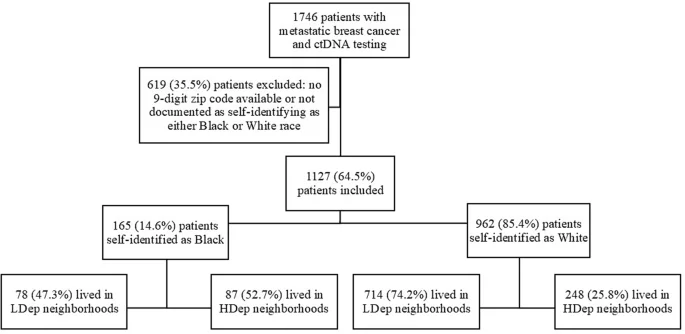
Een retrospectieve cohortstudie onder 1127 patiënten met metastatisch borstkanker toont aan dat wonen in een sociaal-economisch achterstandswijk samenhangt met een agressievere tumorbiologie en slechtere uitkomsten.
Patiënten uit wijken met een hoge achterstandsindex hadden vaker TP53-mutaties (OR 1,49) en ontvingen minder vaak PI3K-remmers bij HR+/HER2-negatieve ziekte (17,4% versus 36,7%). De mediane overleving na ctDNA-test was korter (24 versus 28 maanden).
Deze bevindingen benadrukken de impact van sociaaleconomische factoren op tumorbiologie, behandeltoegang en prognose, wat aandacht vraagt voor equity in de oncologische zorg.
Abstract (original)
PURPOSE: Neighborhood environments appear to influence breast cancer biology and outcomes. This study evaluated somatic, treatment, and outcome differences by Area Deprivation Index in patients with metastatic breast cancer. METHODS: Retrospective, population-based cohort study using clinical and genomic data gathered between 2015 and 2024 at four academic institutions in the United States. The outcomes were differences in circulating tumor DNA mutation profiles, PI3K inhibitor use, and survival between patients with metastatic breast cancer living in high deprivation (Area Deprivation Index ≥ 60 by national rank) and low deprivation (< 60) neighborhoods. RESULTS: Among 1127 patients with metastatic breast cancer, 335 (29.7%) lived in high deprivation areas. These patients were more likely to have TP53 mutations (Odds ratio 1.49, 95% Confidence Interval 1.07-2.08, P = 0.018). Among hormone receptor-positive, HER2-negative patients eligible for PI3K inhibitors, those from high deprivation areas were less likely to receive them (17.4% vs. 36.7%, p = 0.02). Median survival from the time of circulating tumor DNA testing was significantly shorter in the high deprivation group (24 months versus 28 months, p = 0.04) and for Black patients in the high deprivation group versus Black patients in low deprivation group and all White patients (15 months versus 25-28 months, p = 0.02). CONCLUSIONS: We found that patients with metastatic breast cancer living in high deprivation neighborhoods were more likely to have TP53 mutations, an indicator of aggressive disease biology, less likely to receive PI3K inhibitors, and had shorter overall survival compared to patients living in low deprivation neighborhoods by Area Deprivation Index.
Dit artikel is een samenvatting van een publicatie in Breast cancer research and treatment. Voor het volledige artikel, alle details en referenties verwijzen wij u naar de oorspronkelijke bron.
Lees het volledige artikelDOI: 10.1007/s10549-026-08068-3