Stromaal CD10-correlatie met klinisch-pathologische parameters bij invasief borstkanker
Een prospectieve observatiestudie van 73 patiënten met invasief ductaal borstkanker onderzocht de expressie van stromaal CD10 en de correlatie met klinisch-pathologische en immunohistochemische parameters.
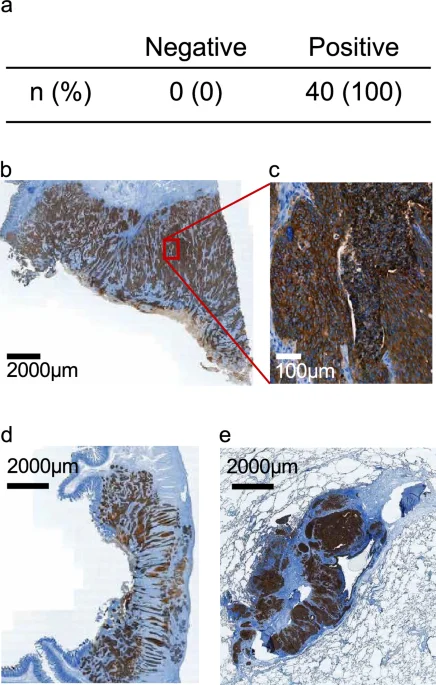
CD10 toonde sterke positiviteit in 49,3% van de gevallen, maar er werden geen statistisch significante verbanden gevonden met agressieve kenmerken zoals tumorgrootte, histologisch grade, lymfevateninvasie of moleculaire subtypes.
Hoewel stromaal CD10 theoretisch een rol speelt bij tumorinvasie, ontbreekt in deze kleine serie het bewijs voor toegevoegde prognostische waarde; validatie met overlevingsdata in multicentrische cohorts is nodig voordat de marker klinisch toepasbaar is.
Abstract (original)
BACKGROUND & OBJECTIVE: Breast cancer is a major global health concern, with tumor heterogeneity and tumor microenvironment (TME) dynamics limiting the predictive value of conventional prognostic markers such as age, tumor size, grade, nodal status, lymphovascular invasion (LVI), and ER/PR/HER2 status. Stromal CD10, a zinc-dependent metalloproteinase expressed by fibroblasts and myoepithelial cells, promotes tumor invasion through extracellular matrix remodeling and is associated with aggressive tumor features. This study evaluates stromal CD10 expression in invasive breast carcinoma and its correlation with clinicopathological and immunohistochemical parameters. METHODS: A prospective study of 73 modified radical mastectomy specimens of invasive ductal carcinoma was conducted between April 2024 and December 2025. Histopathological diagnosis and grading were confirmed using H&E staining. Immunohistochemistry assessed ER, PR, HER2, stromal CD10 expression, and molecular subtypes. Nottingham Prognostic Index (NPI) was calculated for risk stratification. RESULTS: Most patients were female, with predominance of T2 tumors (61.6%), IDC-NST (86.3%), and grade 2 tumors (79.5%). ER, PR, and HER2 positivity were observed in 52.1%, 37%, and 30.1% of cases. Basal-like and luminal B subtypes were most common (30.1% each). Stromal CD10 showed strong positivity in 49.3%, weak positivity in 30.1%, and negativity in 20.5%. CD10 expression showed a higher frequency among cases with T2 tumors, grade 2 histology, lymphovascular invasion, lymph node involvement, ER/PR negativity, HER2 positivity, and basal-like/HER2-enriched subtypes; however, these associations did not reach statistical significance. CONCLUSION: In low-resource settings, Stromal CD10 may have potential as an adjunct marker of tumor aggressiveness; however, in the present study, its associations with adverse clinicopathological parameters were not statistically significant. Larger multicentric studies with survival data are required for validation. Validation requires larger multicentric investigations with survival data.
Dit artikel is een samenvatting van een publicatie in Iranian journal of pathology. Voor het volledige artikel, alle details en referenties verwijzen wij u naar de oorspronkelijke bron.
Lees het volledige artikelDOI: 10.22034/ijp.2026.2087169.3640