Hoge cumulatieve symptombelasting verergert subjectieve cognitieve klachten bij borstkankeroverlevenden
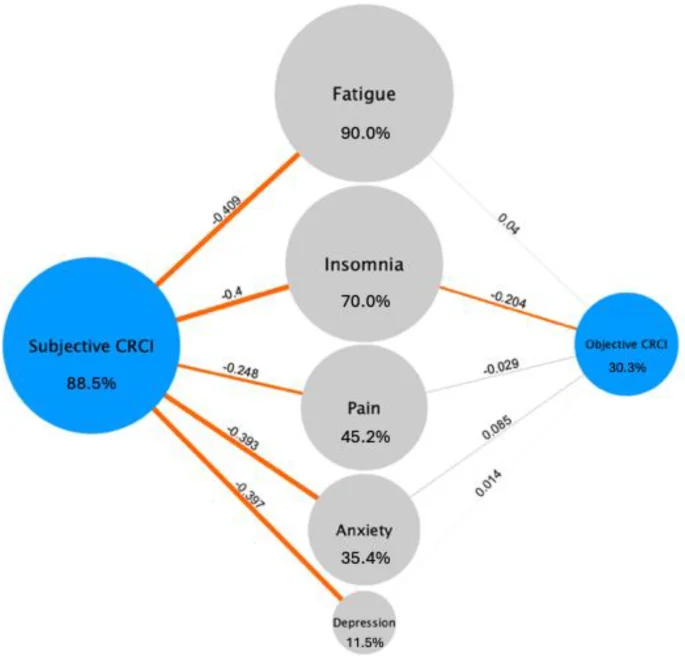
Een cross-sectionele studie onderzocht bij 260 borstkankeroverlevenden de relatie tussen cumulatieve symptombelasting en zowel subjectieve als objectieve kankergerelateerde cognitieve impairments (CRCI).
Een hogere cumulatieve symptoomscore was significant geassocieerd met slechter subjectief cognitief functioneren (coëfficiënt -3,0; 95% BI -3,6 tot -2,4; p < 0,001), terwijl de totale belasting geen verband vertoonde met objectieve cognitieve prestaties (p = 0,58).
Alleen slapeloosheid correleerde zwak met objectieve testscores (r = -0,20; p < 0,001). Deze resultaten onderstrepen dat gerichte symptomatische zorg, met name voor slaapstoornissen, de subjectieve beleving van cognitieve klachten kan verbeteren in de nazorg.
Abstract (original)
BACKGROUND: Cancer-related cognitive impairment (CRCI) is a multifaceted symptom associated with various comorbid conditions, complicating management. This study aims to evaluate cumulative symptom burden and its impact on both subjective and objective CRCI in breast cancer survivors. METHOD: Enrollment data were analyzed from a randomized clinical trial involving women with stage 0-III breast cancer, free of oncology disease, reporting moderate or greater CRCI and insomnia. Subjective CRCI was measured using the Functional Assessment of Cancer Therapy-Cognitive Function (FACT-Cog), and objective CRCI with the Hopkins Verbal Learning Test-Revised (HVLT). Comorbid symptoms (insomnia, fatigue, pain, anxiety, depression) were assessed with validated self-report tools. A Cumulative Symptoms Score (CSS) was calculated to quantify symptom burden. Multivariable linear regression was used to examine associations with CRCI, adjusting for co-variables. RESULTS: Among 260 participants (mean age 56.6 years), 21% were non-White and 10% Hispanic. Fatigue (90%) was the most common, followed by insomnia (70%), pain (45%), anxiety (35%), and depression (12%). Higher CSS was significantly associated with worse subjective CRCI after adjustment for age and chemotherapy (Coef. = -3.0, 95% CI: -3.6 to -2.4, p < 0.001). Each comorbid symptom was correlated with subjective CRCI (all p < 0.001). CSS was not associated with objective cognitive performance (p = 0.58), although insomnia correlated with HVLT scores (r = -0.20; p < 0.001). CONCLUSION: Cumulative symptom burden was associated with subjective but not objective CRCI. Comprehensive symptom management has the potential to improve subjective appraisal of CRCI. Sleep disturbance may be a therapeutic target for improving objective outcomes.
Dit artikel is een samenvatting van een publicatie in Breast cancer research and treatment. Voor het volledige artikel, alle details en referenties verwijzen wij u naar de oorspronkelijke bron.
Lees het volledige artikelDOI: 10.1007/s10549-026-08064-7