NGFR-expressie voorspelt recidief bij HPV-negatief farynxcarcinoom na bestraling of chemoradiotherapie
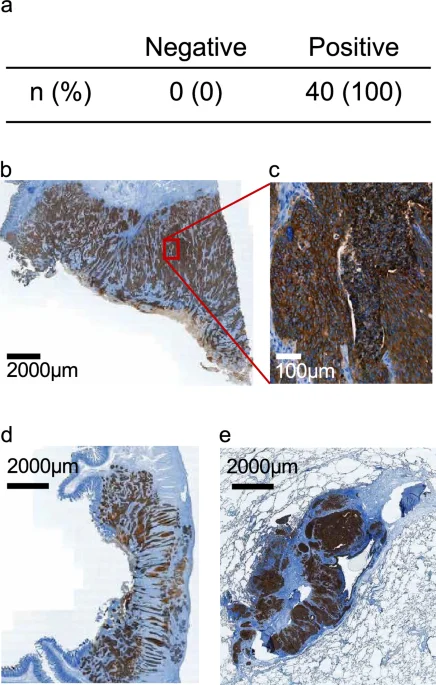
Een cohort van 52 patiënten met HPV-negatief farynxcarcinoom dat werd behandeld met radiotherapie of chemoradiotherapie, werd onderzocht op NGFR-expressie in pretherapeutische biopsieën. Tumoren met een hoge NGFR-intensiteit vertoonden significant een kortere recidiefvrije overleving en een hoger risico op recidief, een verband dat standhield in multivariabele analyses.
Deze bevindingen suggereren dat NGFR een rol speelt in therapieresistentie en kunnen dienen als een klinisch relevant voorspellend biomarker om patiënten met een hoog recidief risico na afloop van de behandeling te identificeren.
Abstract (original)
BACKGROUND: Head and neck squamous cell carcinoma (HNSCC) is an aggressive malignancy with high mortality rates, often exhibiting resistance to conventional treatments such as radiotherapy (RT) or a combination of chemotherapy and radiotherapy (CRT). The nerve growth factor receptor (NGFR, also known as p75NTR or CD271) is a well-established cancer stem cell marker in melanoma, where it has been linked to resistance to multiple therapies. In HNSCC, NGFR has been reported as a poor prognostic marker, with its overexpression associated with disease progression. However, its contribution to therapy resistance in HNSCC remains unknown. METHODS: NGFR expression was assessed by immunohistochemistry in pre-treatment biopsies from a cohort of RT/CRT-treated HPV-negative patients (n = 52), and NGFR staining intensity was classified as negative, low, or high. Associations with recurrence-free survival and post-treatment recurrence were analyzed, including multivariable models and subgroup analyses. RESULTS: NGFR expression showed considerable heterogeneity across tumors. High NGFR intensity was significantly associated with shorter recurrence‑free survival compared with NGFR‑negative or low‑expressing tumors, and this association remained robust in multivariable analyses. Elevated NGFR intensity was also significantly linked to an increased risk of post‑treatment recurrence, with a pronounced enrichment of both local and overall recurrences in NGFR‑high tumors relative to NGFR‑negative/low cases. CONCLUSIONS: These results indicate that NGFR contributes to therapy resistance in HNSCC. Altogether, our findings support NGFR intensity in diagnostic biopsies as a clinically relevant predictive biomarker of recurrence after RT/CRT in HPV-negative HNSCC.
Dit artikel is een samenvatting van een publicatie in Oral oncology. Voor het volledige artikel, alle details en referenties verwijzen wij u naar de oorspronkelijke bron.
Lees het volledige artikelDOI: 10.1016/j.oraloncology.2026.108080