Mechanistische studie toont hoe hypoxie en infectie via CDC20-afbraak aneuploïdie en chemoresistentie bevorderen
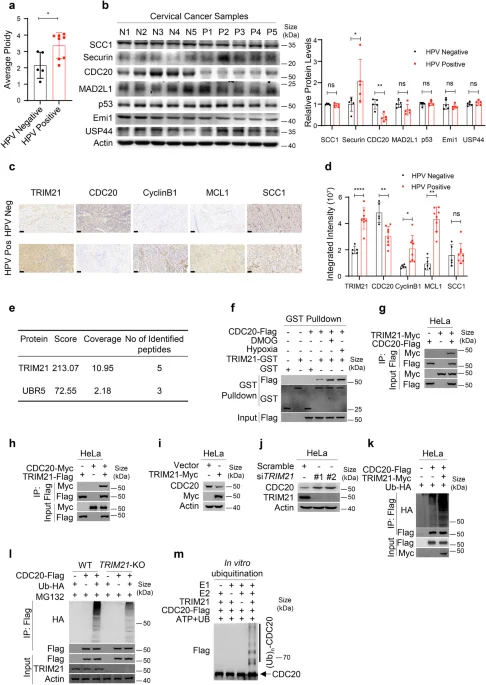
Preklinisch onderzoek identificeert een PHD1-TRIM21-CDC20-signaalkaskade die hypoxische en infectieuze stress koppelt aan aneuploïdie en chemoresistentie in kankercellen. Onder deze omstandigheden wordt PHD1-activiteit geremd, waardoor CDC20 minder snel wordt afgebroken en ophoopt.
Deze ophoping leidt tot accumulatie van securine en MCL1, wat chromosomale instabiliteit en overleving van tumorcellen onder chemotherapie bevordert. In celculturen en muismodellen kon chemoresistentie worden teruggedraaid door CDC20 te stabiliseren via TRIM21-remming of PHD1-activatie.
Het werk beschrijft een potentieel nieuwe farmacologische aanvalsplek voor resistente solide tumoren, maar klinische toepasbaarheid vereist nog validatie in patiëntcohorten en trials.
Abstract (original)
Aneuploidy is pervasive in cancers and contributes to chemoresistance; however, how aneuploidy-inducing stresses, such as infection and hypoxia, promote chemoresistance remains unclear. Here, we identify a prolyl hydroxylase domain protein 1 (PHD1)-E3 ubiquitin ligase TRIM21-cell division cycle protein 20 (CDC20) signaling axis that integrates infection- and PHD1-inhibitory signals to drive aneuploidy and chemoresistance. Analysis of clinical specimens revealed that HPV-positive cervical cancers exhibited reduced CDC20 expression and increased aneuploidy compared with HPV-negative tumors. Through proteomic screening, we found that CDC20 is targeted for degradation by TRIM21, which preferentially recognizes CDC20 when prolines 337 and 340 are non-hydroxylated. Hypoxia and α-ketoglutarate (α-KG) limitation impair the activity of the dioxygenase PHD1, thereby increasing the fraction of non-hydroxylated CDC20. In parallel, infection activates TRIM21. Thus, PHD1 inactivation and infection converge on CDC20 to reduce its abundance, leading to the accumulation of CDC20 substrates, including the separase inhibitor securin and the anti-apoptotic protein MCL1. Infection- and PHD1 inhibition-induced securin accumulation promotes aneuploidy, whereas MCL1 accumulation enhances chemoresistance. In cultured cancer cells and mouse xenograft models, stabilization of CDC20, either through TRIM21 inhibition or PHD1 activation, attenuates aneuploidy and restores chemosensitivity. Together, our study reveals a PHD1-TRIM21-CDC20 signaling axis that integrates hypoxic and infection-associated cues to regulate aneuploidy and chemoresistance, highlighting this pathway as a potential therapeutic target for overcoming chemoresistance.
Dit artikel is een samenvatting van een publicatie in Signal transduction and targeted therapy. Voor het volledige artikel, alle details en referenties verwijzen wij u naar de oorspronkelijke bron.
Lees het volledige artikelDOI: 10.1038/s41392-026-02956-2