Epidemiologische verschuiving in China vergroot druk op preventie en screening
Een uitgebreide review in Nature Reviews Clinical Oncology schetst de epidemiologische transitie van kanker in China, waar de jaarlijkse incidentie nu meer dan vijf miljoen nieuwe gevallen bedraagt. Door vergrijzing en verbeterde diagnostiek stijgt het aantal gevallen van long-, darm-, prostaat- en borstkanker, terwijl slokdarm-, maag- en leverkanker afnemen.
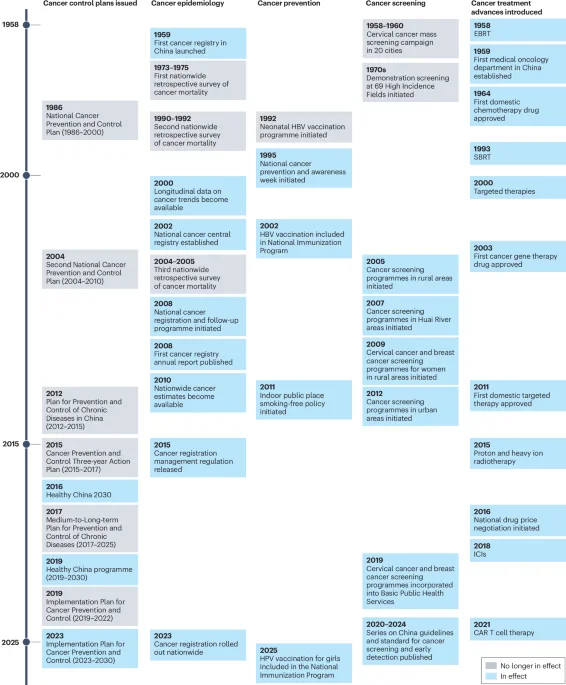
De auteurs analyseren de effectiviteit van nationale kankerbestrijdingsprogramma's sinds 1986 en benadrukken de resterende uitdagingen op het gebied van preventie, screening en behandeling. Voor Nederlandse zorgprofessionals biedt het inzicht in hoe demografische veranderingen en screeningstrategieën de kankerlast op lange termijn beïnvloeden, wat relevant is voor publieke gezondheidsplanning en preventiebeleid.
Abstract (original)
China accounts for nearly 17% of the global population yet contributes approximately 25% of the global cancer burden with >5 million new cancers diagnosed every year; this evolving landscape is reshaping the global pattern of cancer burden. Over the past decades, cancer epidemiology trends have substantially shifted in China. Driven by a rapidly ageing population and an expanded diagnostic capacity, the number of newly diagnosed cancers in China is rising rapidly and particularly of those that are most common in high-income countries, such as lung, colorectal, prostate, thyroid, female breast and cervical cancers. Conversely, the incidence of cancers historically prevalent in China, including oesophageal, gastric and liver cancers, has been declining substantially. In response to this escalating and evolving cancer burden, China has implemented a series of national cancer control initiatives starting in 1986. In this Review, we provide a comprehensive overview of the epidemiology and temporal trends of cancer burden in China, both overall and for the major cancer types, and analyse the key contributors to this landscape, including risk factors, screening programmes and cancer care provision. In the context of national cancer control policies and targets, we further assess progress and discuss the remaining challenges in prevention, screening and cancer treatment, as well as the implications for global cancer control in the coming decades.
Dit artikel is een samenvatting van een publicatie in Nature reviews. Clinical oncology. Voor het volledige artikel, alle details en referenties verwijzen wij u naar de oorspronkelijke bron.
Lees het volledige artikelDOI: 10.1038/s41571-026-01165-8