Chirurgische resectie blijft hoeksteen bij primair en metastatisch darmmelanoom
Een narratieve literatuurstudie van twintig artikelen belicht de diagnostiek en behandeling van zeldzaam primair en metastatisch darmmelanoom. Primaire tumoren presenteren zich vaak solitair en amelanotisch zonder bekende huidmelanoom, terwijl metastasen doorgaans multifocaal zijn en gepaard gaan met een bekende primaire huidlocatie.
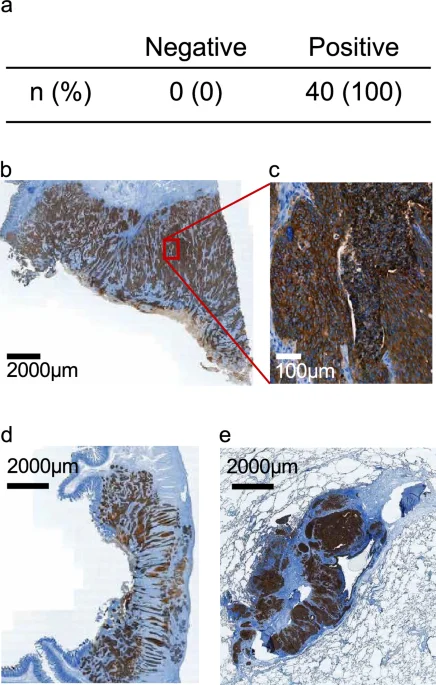
Immunohistochemie bevestigt weliswaar de melanocytische oorsprong, maar onderscheidt niet betrouwbaar tussen primair en metastatisch ziektebeeld. Chirurgische resectie vormt de basis van de behandeling, met systemische therapie gereserveerd voor metastaserende gevallen.
Vroege detectie via geavanceerde endoscopie en multidisciplinaire afstemming zijn essentieel voor het optimaliseren van de uitkomst bij deze zeldzame en agressieve aandoening.
Abstract (original)
Background/Objectives: Intestinal malignant melanoma is a rare entity, most commonly presenting as metastatic disease from a cutaneous primary source. The distinction between primary and secondary intestinal melanoma remains challenging, yet it has important diagnostic, therapeutic, and prognostic implications. This study aims to highlight the diagnostic difficulties and therapeutic considerations associated with intestinal melanoma. Methods: A narrative literature review was conducted using the PubMed database, only including articles published between January 2015 and December 2025. Case reports, case series, and reviews that described primary-like (i.e., presumed primary) or metastatic small bowel melanoma were considered eligible. Extracted data consisted of clinical presentation, diagnostic workup, histopathological and immunohistochemical features, treatment strategies, and outcomes. Results: Twenty articles met the inclusion criteria, comprising ten reporting primary intestinal melanoma and ten reporting metastatic intestinal melanoma. Primary-like intestinal melanoma was frequently solitary, amelanotic, and occurred in patients without a prior history of melanoma, whereas metastatic disease was usually multifocal and associated with a known cutaneous primary source. Clinical manifestations were nonspecific, most frequently including anemia, gastrointestinal bleeding, abdominal pain, or intestinal obstruction. Immunohistochemistry confirmed melanocytic origin in each case, but could not reliably differentiate primary from metastatic disease. Surgical resection remained the cornerstone of treatment, with systemic therapy reserved primarily for metastatic cases. Conclusions: Diagnosis of primary intestinal melanoma relies on excluding other primary sites through comprehensive clinical and imaging evaluations. Early detection using advanced endoscopic techniques and multidisciplinary management are vital for optimizing outcomes. While metastatic intestinal melanoma carries a poor prognosis, complete surgical resection of primary lesions has been associated with improved outcomes in selected patients.
Dit artikel is een samenvatting van een publicatie in Medical sciences (Basel, Switzerland). Voor het volledige artikel, alle details en referenties verwijzen wij u naar de oorspronkelijke bron.
Lees het volledige artikelDOI: 10.3390/medsci14020281