Hoge S100P-expressie correleert met CD8+-infiltratie en potentieel immunotherapierespons bij longadenocarcinoom
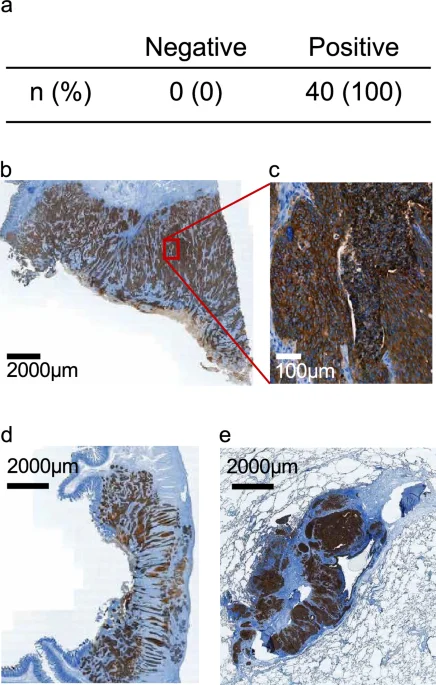
Een single-center studie onderzocht de expressie van het eiwit S100P in weefselmonsters van 50 patiënten met longadenocarcinoom, vergeleken met 50 gezonde en 50 goedaardige longmonsters. Immunohistochemie toonde een significante overexpressie van S100P in tumoren (AUC 0,943 voor differentiatie), met een matige positieve correlatie met CCL4 (r=0,611) en CD8+-lymfocytinfiltratie (r=0,461).
Deze bevindingen suggereren dat S100P niet alleen als prognostische biomarker fungeert, maar ook inzicht kan bieden in de tumormicro-omgeving en de verwachte respons op immuuncheckpointremmers.
Abstract (original)
BACKGROUND: Lung adenocarcinoma (LUAD) is the most common histological subtype of non-small cell lung cancer (NSCLC). Due to the lack of obvious symptoms and signs in the early stages, most patients are already in the middle or late stages at diagnosis. This makes treatment difficult and prognosis poor. Therefore, the identification of effective and specific biomarkers for lung cancer remains a focal area of research. So this study aimed to investigate the expression and clinical significance of S100 calcium-binding protein P (S100P) in LUAD. METHODS: Tissue samples of LUAD (n=50), adjacent normal lung tissue (n=50), and benign inflammatory lesions (n=50) were collected from The Affiliated Cancer Hospital, Guangzhou Medical University, used as the LUAD group, normal group and benign group. Immunohistochemistry (SP method) was employed to detect the expression of S100P, C-C chemokine ligand 4 (CCL4), and cluster of differentiation 8 (CD8) proteins. Correlation analyses were carried out. RESULTS: Database analysis (UALCAN, GEPIA2) identified S100P as an mRNA with high expression in LUAD. Immunohistochemistry demonstrated that the protein levels of S100P and CCL4 were significantly higher in lung tissues of the LUAD group compared to those in the normal group and benign group (all P<0.05). The area under the curve (AUC) of S100P for differentiating LUAD was 0.943. The expression of S100P showed no significant correlation with age, sex, tumor size, or degree of differentiation (all P>0.05). Correlation analysis revealed that S100P expression was moderately positively correlated with CCL4 (r=0.611, P<0.001), and positively correlated with CD8+ lymphocyte infiltration (r=0.461, P<0.001). CCL4 expression was also positively correlated with CD8+ infiltration (r=0.400, P<0.001). CONCLUSIONS: Database analysis indicates that S100P is highly expressed in LUAD and associated with a poor prognosis, making it a potential biomarker for the prognosis of LUAD. Clinical tissue analysis further shows that S100P expression is correlated with CD8+ lymphocyte infiltration in LUAD, suggesting that S100P can serve as a biomarker of lymphocyte infiltration and a potential predictor of the response to immune checkpoint inhibitors.
Dit artikel is een samenvatting van een publicatie in Zhongguo fei ai za zhi = Chinese journal of lung cancer. Voor het volledige artikel, alle details en referenties verwijzen wij u naar de oorspronkelijke bron.
Lees het volledige artikelDOI: 10.3779/j.issn.1009-3419.2026.101.12