EGFR-expressie en veiligheid/werkzaamheid in de SQUIRE-studie bij plaveiselcel-NSCLC
Correlatie van EGFR-expressie met veiligheid en werkzaamheid van necitumumab plus chemotherapie in de SQUIRE-studie bij plaveiselcel niet-kleincellig longcarcinoom. EGFR-expressie was niet predictief voor het voordeel van necitumumab.
Abstract (original)
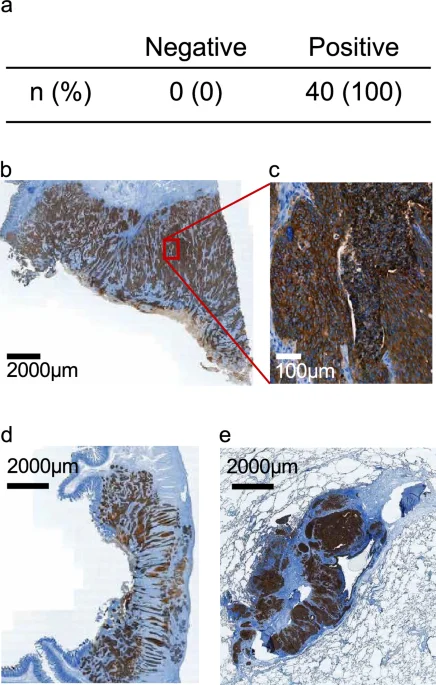
BACKGROUND: SQUIRE demonstrated addition of necitumumab to gemcitabine and cisplatin significantly improved survival in patients with stage IV sq-NSCLC. Here, we report additional outcomes for the subpopulation of patients with tumor epidermal growth factor receptor (EGFR) protein expression. PATIENTS AND METHODS: Patients with pathologically confirmed stage IV sq-NSCLC were randomized 1:1 to receive a maximum of six 3-week cycles of gemcitabine (1250 mg/m(2) i.v., days 1 and 8) and cisplatin (75 mg/m(2) i.v., day 1) chemotherapy with or without necitumumab (800 mg i.v., days 1 and 8). Patients in the chemotherapy plus necitumumab group with no progression continued on necitumumab alone until disease progression or intolerable toxicity. SQUIRE included mandatory tissue collection. EGFR protein expression was detected by immunohistochemistry (IHC) in a central laboratory. Exploratory analyses were pre-specified for patients with EGFR protein expressing (EGFR > 0) and non-expressing (EGFR = 0) tumors. RESULTS: A total of 982 patients [90% of intention-to-treat (ITT)] had evaluable IHC results. The large majority of these patients (95%) had tumor samples expressing EGFR protein; only 5% had tumors without detectable EGFR protein. Overall survival (OS) for EGFR > 0 patients was significantly longer in the necitumumab plus gemcitabine-cisplatin group than in the gemcitabine-cisplatin group {stratified hazard ratio (HR) 0.79 [95% confidence interval (CI) 0.69, 0.92; P = 0.002]; median 11.7 months (95% CI 10.7, 12.9) versus 10.0 months (8.9, 11.4)}. Additionally, an OS benefit was seen in all pre-specified subgroups in EGFR > 0 patients. However, OS HR for EGFR = 0 was 1.52. Adverse events of interest with the largest difference between treatment groups in EGFR > 0 patients (Grade ≥3) were hypomagnesemia (10% versus <1%) and skin rash (6% versus <1%). CONCLUSIONS: In line with SQUIRE ITT, addition of necitumumab to gemcitabine-cisplatin significantly prolonged OS and was generally well tolerated in the subpopulation of patients with EGFR-expressing advanced sq-NSCLC. The benefit from addition of necitumumab to chemotherapy was not apparent in this analysis for the small subgroup of patients with non-EGFR-expressing tumors. CLINICAL TRIAL: NCT00981058.
Dit artikel is een samenvatting van een publicatie in Annals of oncology : official journal of the European Society for Medical Oncology. Voor het volledige artikel, alle details en referenties verwijzen wij u naar de oorspronkelijke bron.
Lees het volledige artikelDOI: 10.1093/annonc/mdw214