Perioperatieve behandelstrategieën bij galwegcarcinoom
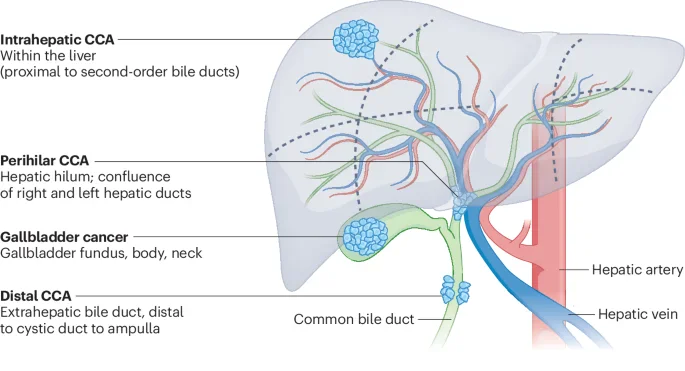
Overzicht van perioperatieve behandelbenaderingen voor patiënten met galwegcarcinoom, inclusief neoadjuvante en adjuvante strategieën.
Abstract (original)
Biliary tract cancers, encompassing intrahepatic, perihilar and distal cholangiocarcinoma and gallbladder cancer, are a heterogeneous group of highly aggressive malignancies. Most patients have unresectable disease at first presentation, and even those who undergo surgery are likely to have disease recurrence. Newer approaches have included liver transplantation for selected patients, and the integration of locoregional and systemic therapies has expanded the number of patients who can benefit from surgery. The advent of immune-checkpoint inhibitors and targeted therapies for patients with advanced-stage disease has prompted the exploration of these agents in earlier-stage disease settings. Despite this progress, treatment algorithms remain complex, necessitating a multidisciplinary and individualized approach to patient management. Future research should focus on optimizing patient selection through biomarker-driven strategies, including the integration of molecular profiles to guide the selection of systemic therapy, as well as refining the criteria for surgery and transplantation. These improvements will require global collaboration and novel clinical trial designs. In this Review, we describe evolving perioperative strategies for the management of patients with biliary tract cancers and highlight emerging directions in the field.
Dit artikel is een samenvatting van een publicatie in Nature reviews. Clinical oncology. Voor het volledige artikel, alle details en referenties verwijzen wij u naar de oorspronkelijke bron.
Lees het volledige artikelDOI: 10.1038/s41571-026-01130-5