Multimodale pijnbestrijding bij oraal squaamcelcarcinoom vereist mechanisme-gerichte aanpak gericht op neuro-inflammatie en perineurale invasie
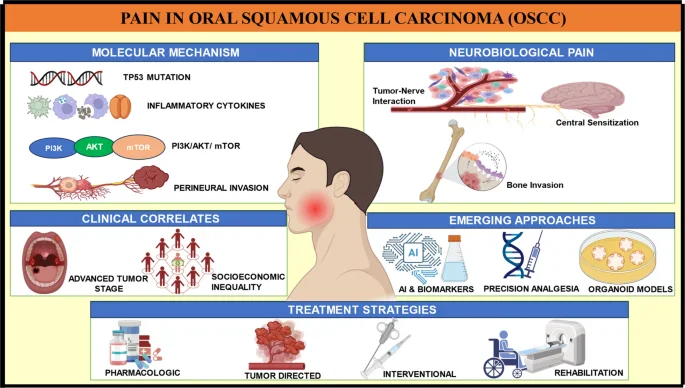
Deze narratieve review beschrijft de complexe pathofysiologie van pijn bij oraal squaamcelcarcinoom, waarbij tumor-nerf interacties, perineurale invasie en neuro-inflammatoire cytokines een centrale rol spelen.
Moleculaire afwijkingen zoals TP53-mutaties en EGFR-overexpressie dragen bij aan perifere en centrale sensitivering, wat een mechanisme-gerichte aanpak rechtvaardigt. De auteurs pleiten voor een multimodale strategie die farmacologische, revalidatie- en tumorgerichte therapieën combineert, ondersteund door opkomende precisie-oncologische tools zoals AI-gestuurde pijnassessering en liquid biopsy.
Een dergelijke geïndividualiseerde aanpak kan de pijncontrole, functionele capaciteit en levenskwaliteit van patiënten met hoofd-halskanker aanzienlijk verbeteren.
Abstract (original)
PURPOSE OF REVIEW: Oral squamous cell carcinoma (OSCC) is frequently associated with severe nociceptive and neuropathic pain that adversely affects patient quality of life, functional capacity, psychological well-being, and prognosis. Pain in OSCC is increasingly recognized not only as a clinical symptom but also as a dynamic indicator of tumor progression and neuroinflammatory activity. This review summarizes the epidemiological, molecular, neurobiological, and clinical mechanisms underlying OSCC-associated pain and discusses current and emerging approaches for mechanism-based multimodal pain management. RECENT FINDINGS: Recent evidence demonstrates that tumor-nerve interactions, perineural invasion, inflammatory cytokines, and peripheral and central sensitization play central roles in the pathogenesis of OSCC pain. Molecular alterations involving TP53 mutations, EGFR overexpression, and PI3K/AKT/mTOR pathway activation contribute to inflammatory signaling, neural remodeling, and nociceptive sensitization within the tumor microenvironment. Advances in salivary biomarkers, liquid biopsy approaches, artificial intelligence-assisted pain assessment, and organoid-based translational models are improving the understanding of cancer pain biology and supporting the development of precision analgesia and individualized therapeutic strategies. OSCC-associated pain is a complex and multidimensional phenomenon closely linked to tumor aggressiveness, neuroinflammation, and disease progression. Effective pain management requires mechanism-based multimodal approaches integrating pharmacological, rehabilitative, interventional, and tumor-directed therapies. Emerging precision medicine strategies, combined with equitable access to supportive care, have the potential to improve pain control, treatment outcomes, patient dignity, and overall quality of life in individuals with OSCC.
Dit artikel is een samenvatting van een publicatie in Current pain and headache reports. Voor het volledige artikel, alle details en referenties verwijzen wij u naar de oorspronkelijke bron.
Lees het volledige artikelDOI: 10.1007/s11916-026-01539-8