Nature Reviews Clinical Oncology: 2026-update over myelodysplastische neoplasmata (MDS)
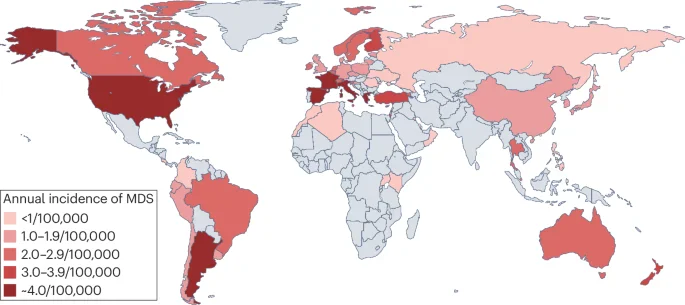
MDS zijn een heterogene groep myeloïde maligniteiten met ineffectieve hematopoïese, cytopenieën en variabel risico op AML-progressie. De mediane leeftijd bij diagnose is 76 jaar. Ondanks twintig jaar vooruitgang in genetisch en pathofysiologisch inzicht zijn er nog weinig ziekte-modificerende therapieën goedgekeurd en blijft allogene HSCT de enige potentieel curatieve optie.
Deze review vat epidemiologie, diagnostiek, risicostratificatie, classificatie en het uitbreidende therapeutisch landschap samen.
Abstract (original)
Myelodysplastic neoplasms, also known as myelodysplastic syndromes (MDS), are a heterogeneous group of myeloid malignancies characterized by ineffective haematopoiesis, cytopenias and a variably increased risk of progression to acute myeloid leukaemia. MDS primarily affect older adults with a median age at diagnosis of 76 years among patients in the USA. Despite major advances in our understanding of the genetic landscape and pathophysiology of MDS over the past 20 years, few disease-modifying therapies have been approved. Allogeneic haematopoietic stem cell transplantation remains the only potentially curative option. This slow therapeutic progress likely reflects the complex and widely heterogeneous pathophysiology of MDS, including a multifaceted interplay of somatic and germline mutations, a dysfunctional immune system, and an inflamed bone marrow microenvironment. Despite improvements in diagnostic tools, classification systems and prognostic models, these changes have introduced challenges for clinical trial design and epidemiological reporting. In this Review, we provide an update on the epidemiology, diagnosis, risk stratification, classification and expanding therapeutic armamentarium for the management of MDS. We also provide an overview of the current challenges to further progress and discuss future directions of research, which will hopefully lead to the development and approval of novel and effective therapies.
Dit artikel is een samenvatting van een publicatie in Nature reviews. Clinical oncology. Voor het volledige artikel, alle details en referenties verwijzen wij u naar de oorspronkelijke bron.
Lees het volledige artikelDOI: 10.1038/s41571-026-01141-2